Published
January 1, 2026
Author
Sharey Team
Local visibility is crucial for restaurant success. With 97% of consumers searching online for local businesses, your restaurant needs to be easily discoverable when potential customers are looking for dining options in your area. Restaurants that structure their menus, maintain strong local data, and pair real photos with accurate information are the ones that get discovered and chosen.
How to Boost Your Restaurant's Local Visibility in 2026
Restaurant discovery didn’t quietly change. It snapped.
Five years ago, local visibility meant ranking for “restaurants near me” and keeping your Google Business Profile mostly accurate. Today, that’s table stakes. In 2026 restaurants are being discovered through AI-generated answers, social feeds, photos, menus, and conversations that never touch your website.
This article breaks down what actually matters for restaurant local SEO now. Not theory. Not buzzwords. Just the mechanics of how diners find places and how restaurants win attention locally.
Local Discovery Isn’t a Search Result Anymore
Most restaurant owners still think in terms of rankings. Page one. The map pack. Blue links.
But discovery has shifted from search results to answers.
When someone asks an AI assistant where to eat, scrolls Instagram for dinner ideas, or taps a Google Maps result, they aren’t comparing ten websites. They’re choosing from one or two surfaced options.
The question is no longer “Do you rank?” It’s “Are you understood well enough to be recommended?”
SEO Still Matters—But It’s Not the End Goal
Traditional local SEO still forms the foundation. If your basics are broken, nothing else works.
- Your name, address, and phone number must be consistent everywhere
- Your Google Business Profile must be complete and actively maintained
- Your website must load fast and work on mobile
This is non-negotiable. But it’s also not enough anymore.
Search engines—and now AI systems—don’t just rank pages. They synthesize information across many sources and decide which businesses are trustworthy enough to recommend.
This is where the shift from SEO to Generative Engine Optimization (GEO) begins.
What Generative Engine Optimization Means for Restaurants
Generative systems don’t look for one “best” page. They look for patterns.
If your restaurant consistently appears online through directories, photos, reviews, and location data—with clear descriptions of what you serve—you’re more likely to be cited or surfaced.
If your presence is thin, vague, or inconsistent, you disappear.
What matters most:
- Specificity: Not “Italian food,” but “handmade pappardelle with wild boar ragu”
- Consistency: The same dishes, descriptions, and details everywhere
- Structure: Text menus that machines can read, not PDFs pr images that they can’t
Restaurants that explain what they serve clearly are easier for both humans and AI to understand. That clarity now drives visibility.
Your Google Business Profile Is Still the Center of Gravity
If you do one thing well, do this.
Your Google Business Profile isn’t just a listing—it’s your most important local data source.
Complete every attribute. Accessibility. Dietary options. Seating. Outdoor dining. Photos. Updates.
Every missing detail is a missed signal. Every outdated photo is a small erosion of trust.
Search engines reward completeness because it reduces uncertainty for users. AI systems do the same.
Photos Are No Longer Optional
People don’t read menus first. They look.
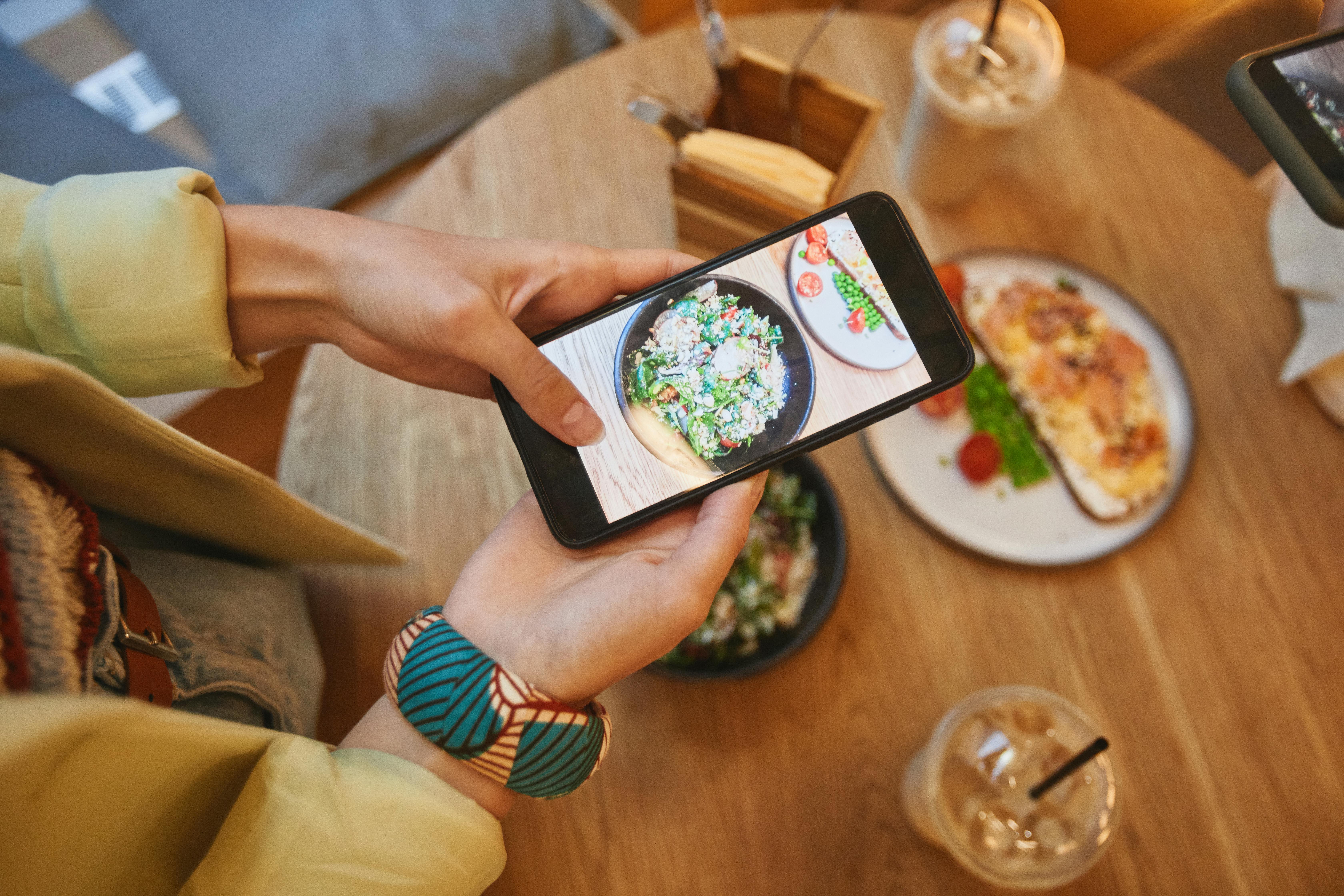
Visual confidence drives decisions, especially for younger diners. Menu photos, interior shots, and real customer images help answer the unspoken question: “Do I want to eat here?”
Data consistently shows that menus with photos drive higher engagement and higher sales. But the type of photo matters.
Polished studio shots help. Real customer photos help more.
Why? Because they feel honest.
User-Generated Content Is Modern Word of Mouth
Word of mouth didn’t disappear. It moved onto phones.
Photos tagged on Instagram. Stories shared after dinner. Group chats deciding where to go next weekend.
Restaurants don’t control these moments—but they can enable them.
The more your dishes are named, photographed, and shared, the more visible you become in the places discovery actually happens.
When customers engage with your content on your domain—or platforms built around restaurant menus—you send strong quality signals that compound over time.
Local Visibility Still Starts Offline
All of this technology only works if the restaurant itself delivers.
Local partnerships, community events, and real-world presence still feed digital discovery. Reviews don’t appear out of nowhere. Photos don’t take themselves.
The strongest local brands are the ones that show up consistently—in neighborhoods, online, and in conversations.
Where Sharey Fits In
Most local visibility problems aren’t marketing problems. They’re clarity problems.
Sharey focuses on the foundation: menus.
By turning restaurant menus into structured, searchable content and pairing them with real photos of actual dishes, Sharey helps diners understand what a restaurant serves before they arrive.
That clarity improves discovery for people and for AI systems trying to recommend places confidently.
Instead of relying on ads or generic listings, Sharey helps restaurants build visibility through accurate menus, visual proof, and real customer contributions-especially for independent and cultural restaurants that often get overlooked.
In a world where discovery is driven by understanding, better menus win.